Which Countertop Material Holds Up Best in a Humid Southern Kitchen

Every seam lands over solid support, never across an open span. Countertops in Chattanooga, TN get checked against that rule before any stone is cut, and the sequence (as set down at countertops chattanooga arc light scope) starts with the cabinet run and the sink location, not the slab. Cabinets that are out of level or bowed get shimmed first, because a top inherits every error underneath it. Material choice comes after the layout is settled.
Templating comes before the slab
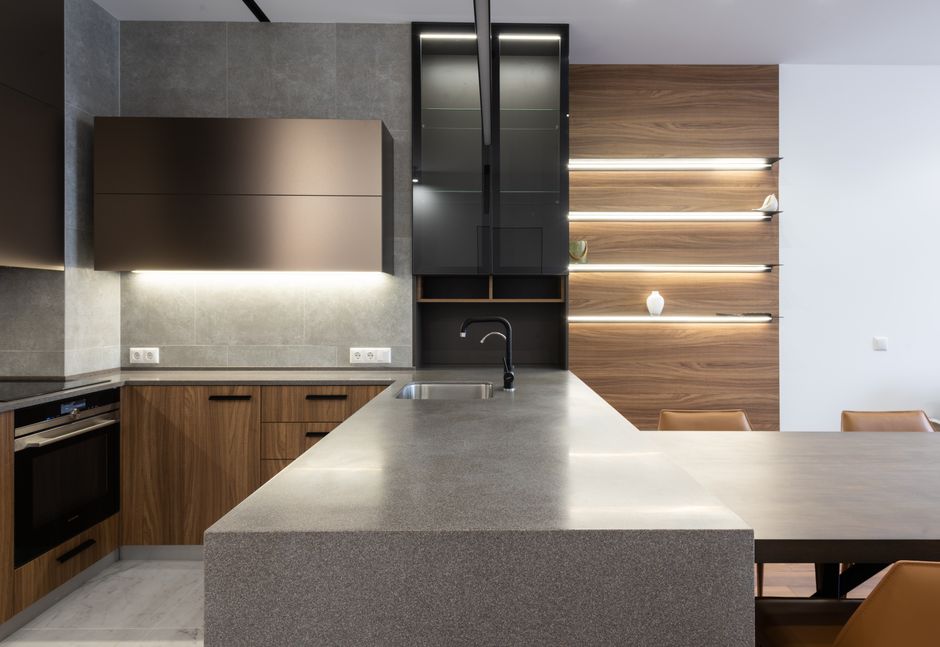
Templating fixes the cut lines, the sink and cooktop openings, and the overhang. A typical seated overhang is a few inches past the cabinet face, and any longer unsupported stone needs a bracket or corbel. Seam placement follows the template. Seams belong near the sink and cooktop only when the support is solid, and they are better kept away from the narrow strip of stone in front of a sink cutout, where a crack usually starts.
Granite and its porosity
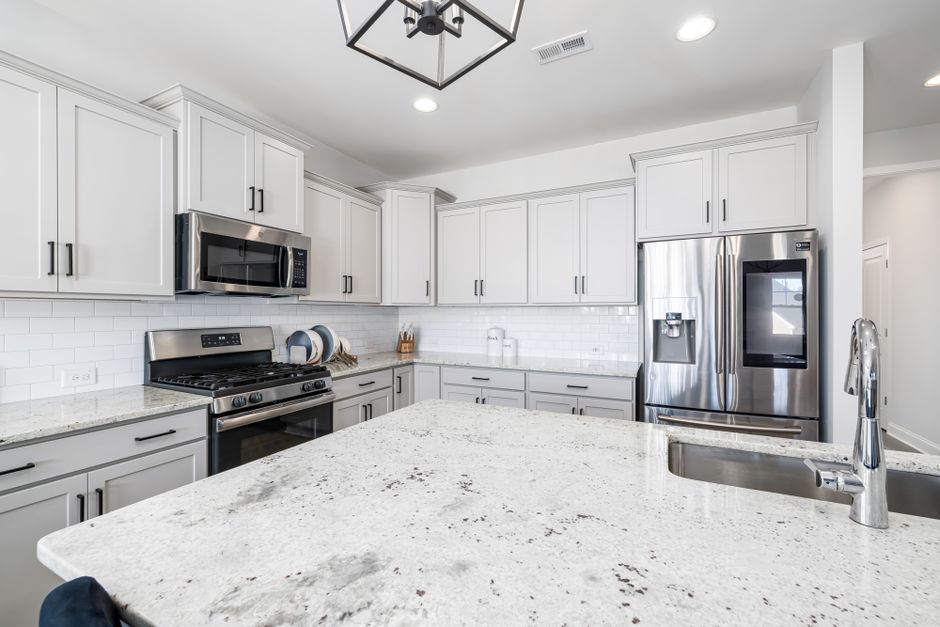
Granite is natural stone, and porosity varies by slab, so some granites absorb liquids faster than others. Two slabs sold under the same name can behave differently. A few drops of water on an unsealed corner of the actual slab, left to sit, shows how fast it darkens. Sealing is judged by that result, not by the color of the stone.
Quartz and heat, quartz and sun
Quartz countertops are engineered from crushed quartz bound with polymer resin. That resin can scorch or discolor under direct high heat, so a trivet under a hot pan is a habit worth keeping. Many quartz products are also not recommended for outdoor use, since sunlight can yellow or fade the resin over time. A porch kitchen on Lookout Mountain or a covered patio near the river is a poor place for it. Quartzite and porcelain are different materials and are judged on their own terms.
Marble and acid
Marble is mostly calcium carbonate, so acids such as lemon juice, vinegar, and tomato sauce etch the surface through a chemical reaction. The etch shows as a dull spot, not a stain. Marble can still work in a kitchen, particularly on a baking station or with a honed finish that hides the marks. The owner just has to accept that it will wear and show it.
Laminate, wood, and solid surface
Laminate has a particleboard or fiberboard core that swells when water reaches it through seams or unsealed cutout edges. The sink cutout edge gets sealed before the sink goes in. Butcher block is wood that expands and contracts with seasonal humidity, which is significant in humid summers in the Tennessee River valley. It has to be fastened so it can move, with slotted holes or elongated screw positions, not rigid screws set tight. Wood tops need regular oiling or a sealed finish to resist water around sinks. Solid surface is resin based and can be sanded and refinished to remove light scratches, which makes it forgiving in a busy kitchen. Its seams can be joined nearly invisibly, and an eased edge or bullnose profile is routed straight into the material.